
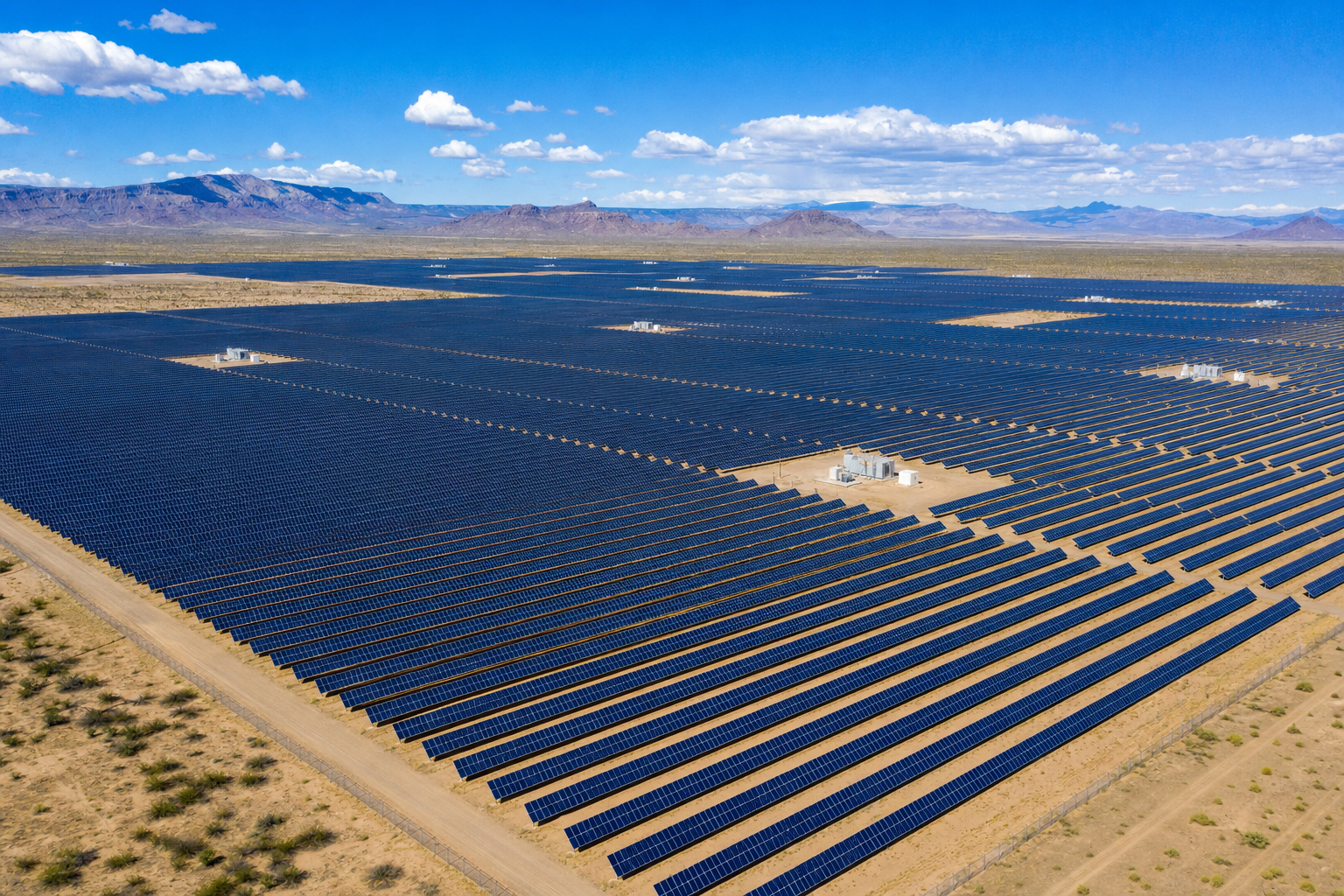
Arizona is one of the sunniest states in the United States, with an average of 6.5 peak sun hours per day — that's more solar energy per panel than nearly any other state. Combined with a 25% state income tax credit, full sales and property tax exemptions, and rising electricity rates, Arizona is one of the most financially compelling places to go solar in 2026. Here's exactly what you can expect to pay, and what you'll save.
Average Solar Installation Costs in Arizona
Solar system costs vary based on system size, equipment quality, and installer, but here are the real numbers Arizona homeowners are seeing in 2026:
- Typical 8 kW residential system: $22,000–$28,000 before incentives
- Cost per watt: $2.50–$3.50 fully installed (equipment + labor + permits)
- Larger systems (10–15 kW): Lower cost per watt — typically $2.30–$3.00/W
- Battery storage addition: Adds $10,000–$15,000 for a single Tesla Powerwall 3
A good rule of thumb: multiply your desired system size in kilowatts by $2.75–$3.00 to estimate your pre-incentive installed cost. So a 10 kW system runs approximately $27,500–$30,000 before any incentives are applied.
Arizona Solar Incentives That Reduce Your Cost
Arizona offers three substantial incentives that stack on top of each other:
- Arizona Residential Solar Tax Credit (25%) — Arizona offers a 25% state income tax credit on qualified solar installations, up to a maximum of $1,000 per year ($1,000 cap per taxpayer). This applies to the installed cost of your system and is claimed on your Arizona state income tax return. Unlike the federal credit, this is a true tax credit — dollar-for-dollar off your state tax liability.
- Sales Tax Exemption (100%) — Solar equipment and installation in Arizona is 100% exempt from state and local sales tax. On a $25,000 system, this saves approximately $1,800–$2,500 depending on your county.
- Property Tax Exemption (100%) — Solar adds measurable market value to an Arizona home (typically $3–$4 per installed watt), but Arizona law exempts 100% of that value from property taxes permanently.
| Incentive | Value on $25,000 System | Notes |
|---|---|---|
| AZ State Tax Credit (25%) | $1,000 | Capped at $1,000/year; can carry forward |
| Sales Tax Exemption | ~$1,875 | Applied at purchase, automatic |
| Property Tax Exemption | Ongoing savings | Permanent; applies every year |
| Net System Cost | ~$22,125 | Before financing costs |
Financing Options
How you finance your solar system significantly affects your total cost and timeline to payback:
- Cash purchase — The highest upfront cost but the best overall return. No interest costs, full ownership of all incentives and net metering credits, fastest payback, highest 25-year ROI. Best for customers who have the capital available.
- $0 Down Solar Loan — You own the system from day one with no money out of pocket. Monthly loan payments are typically lower than your current electricity bill, creating positive cash flow immediately. Legacy Energy works with multiple lenders offering 4.99%–9.99% APR depending on credit profile and loan term.
- PPA / Solar Lease — A third party owns the system and sells you the electricity at a fixed rate. No upfront cost and instant bill savings, but you don't own the system and can't claim the state tax credit. Best for customers who can't qualify for a loan or don't want any ownership responsibility.
Payback Period in Arizona
Arizona's combination of high sun hours and rising electricity rates creates some of the fastest solar payback periods in the nation. Here's a realistic example for a Phoenix-area homeowner:
- System cost: $25,000 (8 kW, before incentives)
- After state credit and sales tax exemption: approximately $22,125
- Annual electricity savings at $0.13/kWh average rate: ~$2,200–$2,600/year
- With 4% annual electricity rate escalation: savings grow each year
- Cash payback estimate: 5–7 years
- Loan payback (positive cash flow from month 1): Effective payback 7–9 years
Arizona's electricity rates, while below the national average today, have been rising at approximately 3–5% annually. Every year that passes, your solar savings grow while your loan payment stays fixed. This rate escalation effect shortens your effective payback period with each passing year.
What Affects Your Solar Cost
- Roof size and condition — Larger, south-facing roofs with ample unshaded space allow bigger systems and better production. Roof replacements or repairs before solar install add cost.
- System size (kW) — Sized to offset your electricity usage. Larger homes with pools or EV chargers need larger systems.
- Panel brand and tier — Tier 1 panels (SunPower, Qcells, Canadian Solar, etc.) cost more upfront but produce more energy over 25 years. Legacy Energy uses only Tier 1 equipment.
- Inverter type — String inverters are less expensive; microinverters (Enphase) or power optimizers (SolarEdge) cost more but perform better with shading and enable panel-level monitoring.
- Battery storage — Adding a Tesla Powerwall 3 or Enphase IQ Battery adds $10,000–$15,000 to the system cost but provides outage protection and time-of-use optimization.
Commercial Solar in Arizona
Arizona's exceptional sun resource makes it one of the top commercial solar markets in the country. For businesses, the economics are even stronger:
- Larger systems lower cost per watt significantly — commercial installations at 50–500 kW often come in at $1.80–$2.40/W
- The 30% commercial Investment Tax Credit (Section 48E) remains fully active through 2027 — a $500,000 system generates $150,000 in federal tax credits
- MACRS 5-year accelerated depreciation allows businesses to depreciate solar assets rapidly, creating substantial tax benefits in the first two years
- Demand charge reduction — solar significantly reduces utility demand charges, which can account for 20–40% of a commercial electricity bill
Get a free Arizona solar quote from Legacy Energy
Our Arizona solar specialists will calculate your exact costs, incentives, and payback period based on your actual utility bill and roof specifications.


